2Signals · Hub of Talents 3

01 / 15

2Signals

Build a trading rule.
Test it. Understand the results.

Create and test trading rules without writing code. Learn how they work through a hands-on course, then use the same tools to explore your own ideas.
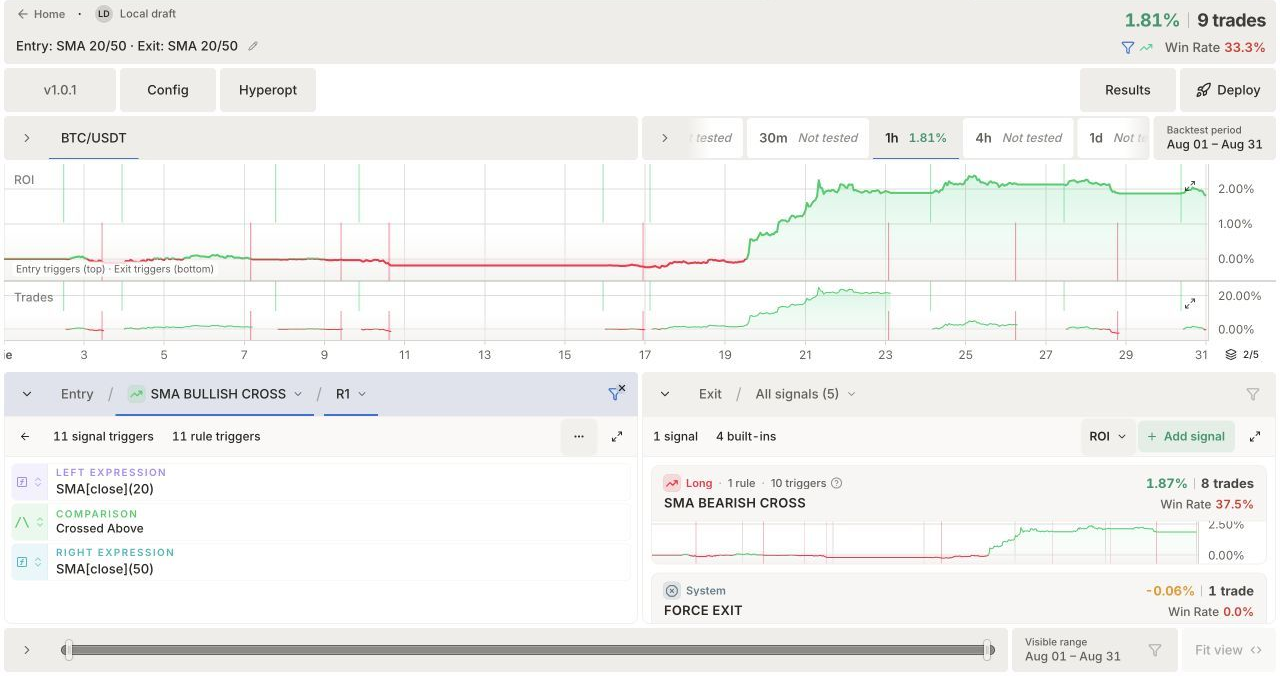
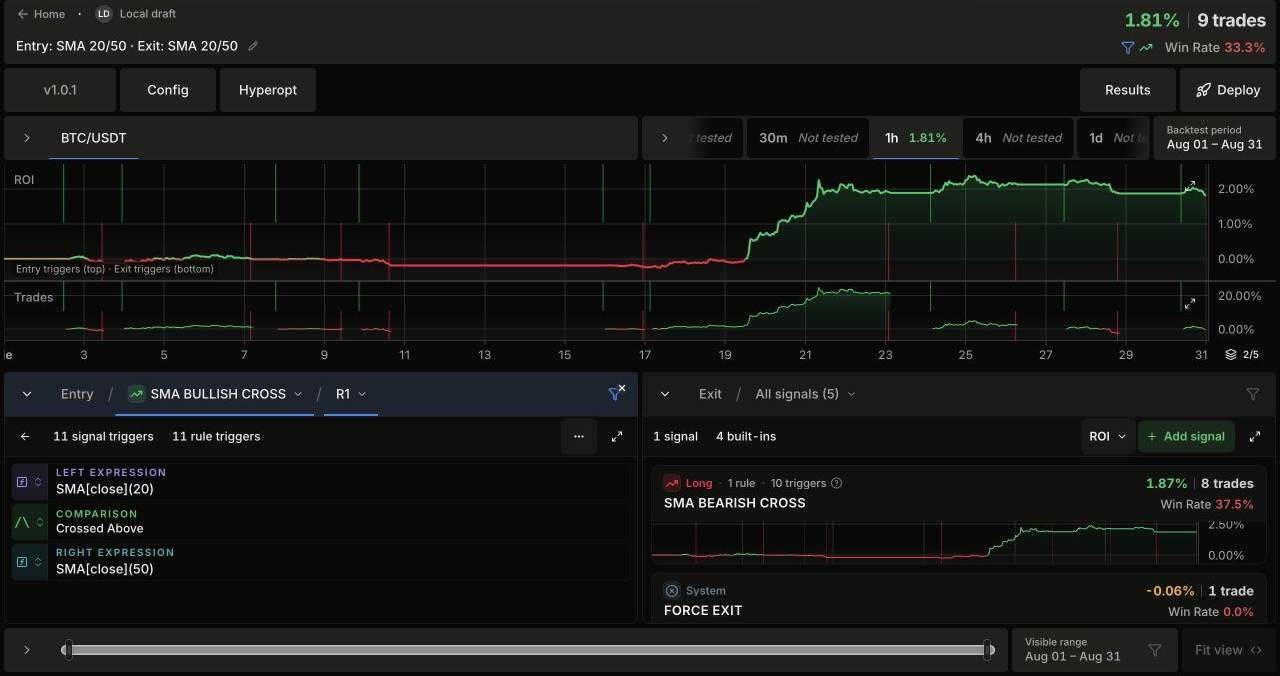
2Signals prototype: rule editor, chart and simulation results
Screenshot of the prototype. The results come from a historical simulation and are not a forecast.

The integrated prototype and course curriculum are in place. Incubation will help prepare the product for launch, understand customer needs and shape the initial offer.

Who it is for and the problem they face

02 / 15

I have an idea. How can I put it to the test?

Knowing what an indicator does is not the same as testing an idea yourself and understanding the result.

01 · RULE

Turn an idea into a clear rule

Define exactly when to enter and exit a trade. Tell the difference between a moving average crossover and one average staying above the other.

02 · EXPERIMENT

Test it on historical data

Choose a time period, run a test, change an assumption and compare the results without writing a script.

03 · INTERPRETATION

Understand the limitations

Look at the trades, costs and drawdowns. Understand what a historical result can and cannot tell you.

We are starting with adults who use charts and want to test trading rules without coding. Their needs and willingness to pay still need to be validated.

Workflow · existing prototype

03 / 15

From hypothesis to experiment, without the code

Change a condition, run another test and compare the results, all in the same workspace.

  1. 01

    Idea

    What do I want to test?

  2. 02

    Visual rule

    Define the conditions.

  3. 03

    Test

    Run it on historical data.

  4. 04

    Interpretation

    Understand the result.

  5. 05

    Next version

    Refine and compare.

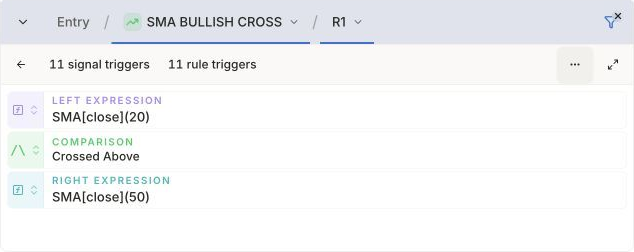
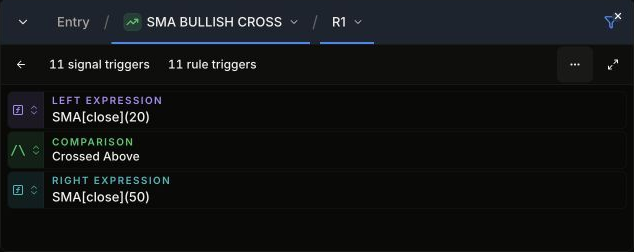
Visual condition for an SMA 20 and SMA 50 crossover
Example: SMA 20 crosses above SMA 50.

When you write your own script

You have to turn the idea into code and check that the code works before you can assess the result.

In 2Signals, you edit the rule visually

You can see the conditions in the editor. Trades, results and saved experiments show how each change affects the outcome.

The same rule is used in the lesson, editor, chart and simulation. Current data covers crypto; support for equities is a separate development step.

TradeLearn · the course is already built

04 / 15

Learn by doing

Users complete tasks directly in the app and get explanations with each answer. Only the first lesson will be free.
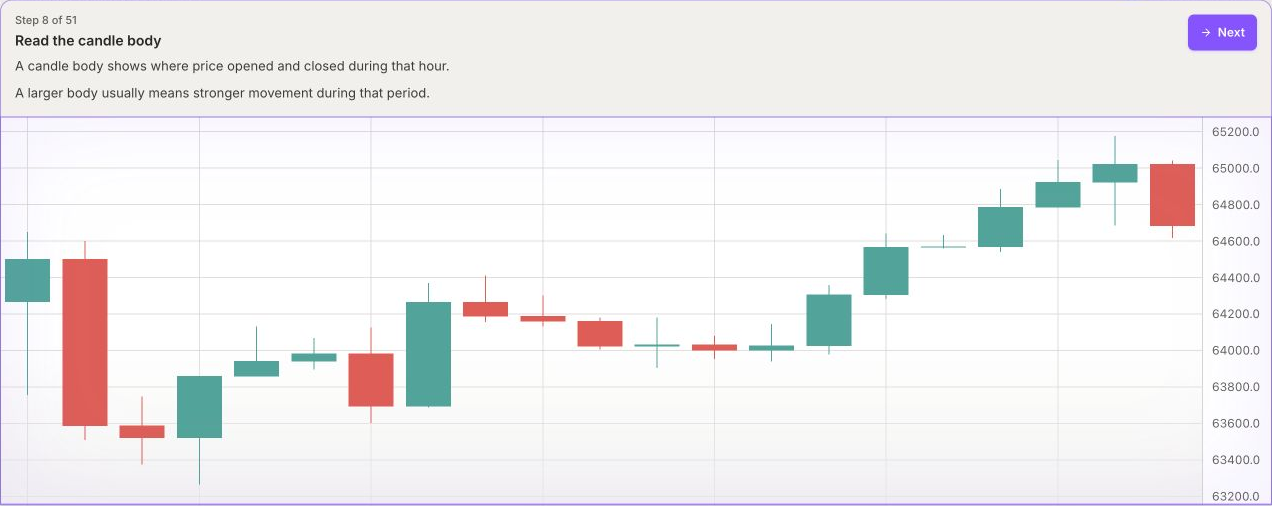
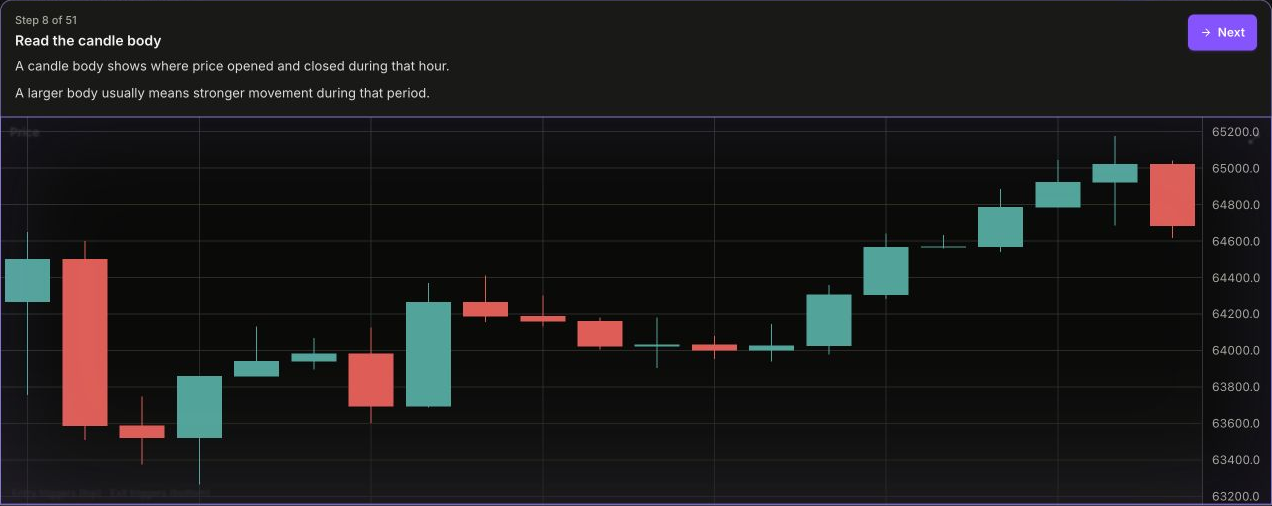
2Signals lesson explaining chart data
Read a chart, define a condition, run an experiment and explore the results.
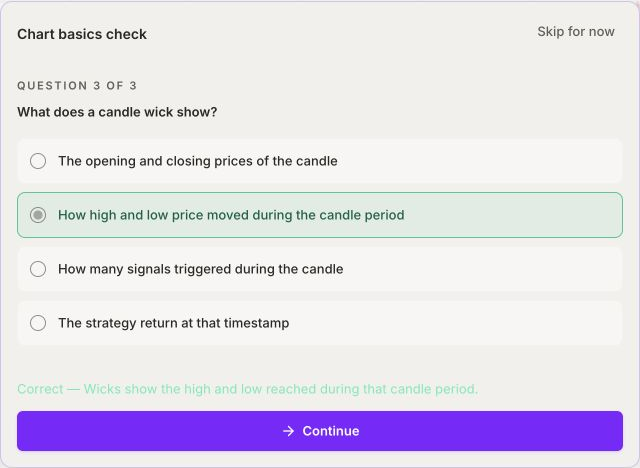
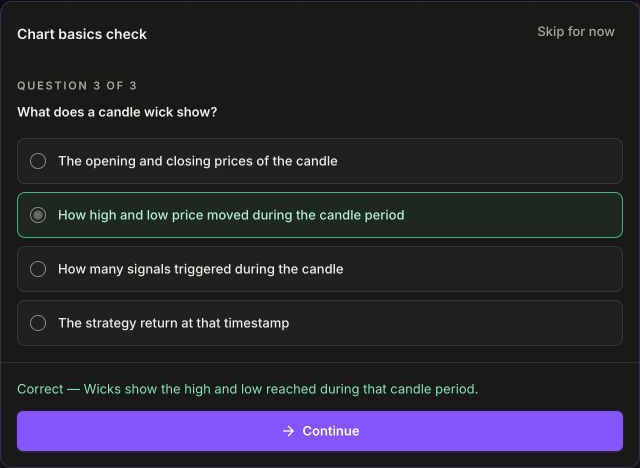
First-lesson quiz with an explanation of the answer
Screenshot of the English version. Learning outcomes have yet to be evaluated.

9 core lessons and an optional module are built into the app, in Polish and English. Next steps: expert review, testing the full learning journey and research with participants.

The 2Signals ecosystem

05 / 15

One engine. A connected learning and testing experience.

TradeLearn guides users through the exercises. TradeHub is their workspace, TradeEngine runs the simulations and TradeAI helps them analyse the results.
TradeEngine

Runs simulations on historical market data.

Working prototype, with test results and technical reports
TradeLearn

A course with in-app exercises and quizzes that explain the answers.

9 lessons and an optional module, in Polish and English
TradeHub

A workspace for building rules and running experiments.

Working prototype; community features are planned
TradeAI

An assistant that uses the user’s rules and results as context.

Integrated; quality and scope still need review

Incubation will build on the existing product. TradeHub community features and TradePlayground are planned, but are not needed for the initial market launch (MVP).

Alternatives and what sets 2Signals apart

06 / 15

From a guided lesson to your own tests

The lesson runs inside the product. Users work with the same rule in the lesson, editor, chart and every experiment that follows.

TradingView

Custom Pine Script strategies, ready-made scripts, backtesting and reports. In 2Signals, learners edit conditions visually as part of the lesson.

Capitalise.ai

Build, test and automate scenarios written in English. 2Signals combines visual condition blocks with exercises and quizzes in Polish and English.

StrategyQuant / AlgoWizard

Visual rule building, testing, optimisation and interactive tutorials. A close alternative against which to compare the full learning and testing experience.

2Signals connects learning, rule building, testing and interpretation in one workflow.

Our hypothesis: users can move faster from understanding a condition to running an experiment they can reproduce. We will measure task completion time, help needed and errors in interpreting results.

How the platform could grow

07 / 15

From a first trading rule to a tool users return to

The course introduces users to strategy testing. As the platform develops, it can serve more customer groups. Polish and English from the start.

01 · START

Learn with crypto data

Adults who use crypto charts and want to learn how to test their own rules. They start with the course and move on to their own experiments.

02 · NEXT

Ongoing strategy testing

Independent traders who regularly test, compare and optimise strategies. A planned subscription for those who want to keep using the platform.

03 · LONGER TERM

Other asset classes

Users interested in other markets, including equities. Expansion would follow validation of the initial offer, with new data sources, integrations and testing.

The hypothesis: after finishing the course, users come back with their own ideas and want to keep using 2Signals.

This is a proposed path, not a market-size estimate. Current data covers crypto. Adding other asset classes will require integrations, data rights and separate testing.

Our first customers and how we will reach them

08 / 15

100 course purchases: our first validation target

Our first consumer product is a practical course in building and testing trading rules, aimed at chart users in Poland and English-speaking markets.

WHO WE ARE STARTING WITH

From chart to rule

People who use charts and want to test their ideas without writing scripts. The free first lesson lets them try the workflow.

12-MONTH ACQUISITION SCENARIO

5,000 → 1,000 → 100

People reached → first-lesson starts (20%) → purchases (10% of lesson starters). Target: 100 courses at EUR 99. Revenue split: 50% Poland / 50% abroad.

ACQUISITION PLAN

Three channels to test

Planned reach: 3,000 people through content and search, 1,500 through demos and communities, and 500 through paid campaign tests. We will track how many people we reach, conversion and acquisition costs.

Signals of interest: a comparable Udemy course has 3,590 enrolments; 31% of 6,009 SII survey respondents report holding crypto. These are separate populations, so we do not add them together. 100 purchases is a first-year target, not a ceiling on growth. The project has no users or sales yet.

We plan to reach 5,000 people and assume 2% will buy the course. These figures do not represent market size or market share. Both assumptions will be tested during incubation.

Business model

09 / 15

The course brings users in. A subscription lets them stay.

The course is a product in its own right and an introduction to 2Signals. A subscription will let users keep experimenting after the beta ends.

99 EUR

one-off course purchase

The first paid product

Access to the course and its updates with no time limit, plus platform access at no extra cost during beta. The free first lesson lets users try the learning experience before they buy.

NEXT STAGE

EUR 19 / 49 / 99 per month

Starter, Pro and Advanced: planned subscriptions for users who want to keep running their own experiments. These plans are intended to generate recurring revenue once launched.

Users choose whether to subscribe

Buying the course does not automatically start a paid subscription. The beta end date and expected subscription conversion rate are still to be determined. Subscriptions are not included in the first-year target.

100 purchases × EUR 99 = EUR 9,900 in sales over the first 12 months, before taxes, discounts, refunds and costs. This is a target for testing demand, not MRR or a profitability forecast.

Project status and evidence

10 / 15

TRL IV: components integrated and tested

The starting point is working code and technical tests under controlled conditions. Contact with potential users has been limited to conversations, demos and feedback.

Already built

Rule editor, simulation engine, charts, saved experiments and comparisons, optimisation, course content and AI integration.

Technical test results and their limits

Compared with Freqtrade: 7 pairs, 181,447 candles and 123 trades, with no differences in the fields checked. The report dated 27 Jul 2026 uses a local export; it does not cover the full journey of a signed-in user.

Still to validate with users

Whether users need the product, can use it independently, understand the results and will pay for the course or a later subscription. No pilot has been conducted yet.

Before launch

Legal review of features and data use, course review, checkout, access controls, security and support costs.

Self-assessment: TRL IV, based on integrated components and controlled tests. This needs verification by the programme operator. Historical simulation is the intended use; a lack of sales alone does not determine TRL.

Six months of incubation

11 / 15

Each stage informs the next decision

January–June 2027, subject to acceptance into the programme and agreement on the Individual Incubation Programme (IPI).

MONTHS 1–2

What do we need to launch?

Review the legal position on features and data use, define the offer and plan the required changes. Prepare to set up the company and agree on hardware funding. Outcome: launch requirements and a research plan.

MONTHS 3–4

Is the product ready for a pilot?

Review the course, research user needs and test checkout, access and security. Outcome: improvements and an assessment of the full journey, from the first lesson to an independent experiment.

MONTHS 5–6

What did we learn from users?

Run the pilot and test demand: independent use, return visits, willingness to pay and support costs. Outcome: a report and a decision to launch, improve or change the offer.

Track each outcome separately: task completion, understanding the limits of backtesting, course completion, beta usage and willingness to pay.

Target: 100 pilot participants, including 20 interviews and 10 observed sessions. Participants may take part in more than one activity. Participation does not count as a course purchase.

Founder · product and technology

12 / 15

I built the prototype myself

Aleksander Froncz

2Signals founder · product and engineering

13+ years

of experience building software

A track record of delivering software

React, TypeScript, Node.js, integrations and testing. Work for clients including Klarna and Beautypass. Engineering degree in Computer Science from Warsaw University of Technology.

WHAT I HAVE BUILT

  • Visual rule editor
  • Simulation engine and results on charts
  • Experiments and optimisation
  • Interactive course in Polish and English
  • AI assistant integration

My commitment to the programme

6 months of product development, implementing recommendations and working with users, with the option to commit full-time. I need support with legal issues, research, learning design and bringing the product to market.

Aleksander Froncz is the sole creator and owns the rights to his own code and materials. The project was developed outside his sole proprietorship. He plans to set up a new company in Eastern Poland if accepted into the programme.

Incubation goal · Hub of Talents 3

13 / 15

I’ve built the prototype. Now it’s time to test demand.

During incubation, I want to get the product ready to sell and find out whether users can work independently, return to their experiments and are willing to pay.

SUPPORT NEEDED

Legal readiness for launch

Legal review, implementation of recommendations, documentation and a clear scope for the course and beta platform.

SUPPORT NEEDED

A reliable experience from start to finish

Review the course and test checkout, access and security. Check that users can run their own experiments in one workspace.

SUPPORT NEEDED

Evidence to guide the next steps

Pilot findings, tests of demand and acquisition channels, cost estimates and a sales plan for the course, followed by platform subscriptions.

Estimated budget: PLN 60k excluding VAT for services and other costs, plus a laptop at PLN 15k including VAT. Laptop funding must be confirmed with the programme operator.

2Signals · 29 Sep 2026. Support sought: services from the programme operator and a possible grant for approved external services, as agreed in the IPI. Personal funds provide a cash buffer. See the appendix for detailed assumptions and costs.

Appendix A · how we will measure costs

14 / 15

Understand the costs before scaling

Course sales will test demand for the initial offer. Subscriptions are intended to fund continued platform use, but users must choose to subscribe separately.

ACQUISITION

What does it cost to win a customer?

Track spending and time spent on each channel. Calculate customer acquisition costs from actual purchases; taking part in the pilot does not count as a purchase.

SUPPORT

How much help do users need?

Use the pilot to measure support requests, time spent helping users and work needed to update the course. Include beta support and ongoing course maintenance.

INFRASTRUCTURE

What does platform usage cost?

Measure infrastructure, data and AI usage during real tasks. Separate fixed running costs from costs that depend on user activity.

PAYMENTS

How much of the course price do we keep?

Confirm payment processing fees and tax treatment. Once sales begin, track discounts and refunds to establish how much each purchase brings in.

Support costs, retention and conversion still need testing. A longer beta and course access with no time limit require funds for ongoing support.

Once subscriptions launch, measure plan choices, cost per active user and retention. We are not assuming an average revenue per subscriber today.

A measurement plan, not a margin forecast. Pilot findings, supplier terms and sales data will provide the basis for calculating unit costs and assessing profitability.

Appendix B · six-month cost estimate

15 / 15

Priorities: legal readiness, quality and market entry

Legal review, documentation and data rights
PLN 18k
User needs and usability research
PLN 8k
Course content and learning design review
PLN 5k
Technical and sales process testing
PLN 8k
Security review
PLN 6k
Participant recruitment and customer acquisition tests
PLN 5k
Infrastructure, data, AI and tools
PLN 4k
Company setup and administration
PLN 6k
Services and other costs, excluding VAT
PLN 60k

Support sought from the programme

Services provided by the programme operator, plus a possible grant for approved external services. The scope of support and allocation of costs will be agreed in the incubation plan.

Laptop: PLN 15k including VAT

Needed from the start for development, simulations and testing. The funding source must be confirmed with the programme operator.

Cash buffer: up to PLN 100k

Personal funds are available to cover costs while waiting for reimbursement, as well as VAT and costs outside the support package. The amount used will depend on the services and grant awarded.

This is a budget estimate, not a commitment to fund everything personally. Services and any grant must be agreed in the IPI. Figures need supplier quotes; the founder’s own time is excluded.